
A shared data foundation统一碳数据底座
Link products, BOMs, batches, manufacturing, purchasing and energy records. Keep quantities, units, boundaries and source documents together.关联产品、物料清单、批次、生产、采购与能源记录,统一管理数量、单位、核算边界和原始单据。
MurrCloud proposes a connected workspace for energy-storage carbon accounting and assurance learning: from materials and energy records to calculation, evidence review and professional judgment.木耳云拟为新型储能碳核算与鉴证教学构建贯通式工作空间:从物料与能源记录出发,连接计算、证据核查与专业判断。
Concept illustrations below explain the proposal. Storage-specific functions are planned, rather than a claim of an operational or certified system.下方概念示意用于说明拟建方案。储能专项功能处于规划阶段,不代表系统已完整上线或取得认证。
Translate the teaching design into reusable software services, with each input, factor, approval and output linked to its source.将教学设计转化为可复用的软件服务,使每项输入、因子、审核与输出均能关联其来源。
Link products, BOMs, batches, manufacturing, purchasing and energy records. Keep quantities, units, boundaries and source documents together.关联产品、物料清单、批次、生产、采购与能源记录,统一管理数量、单位、核算边界和原始单据。
Separate lifecycle and regulatory methods, with explicit factor versions, allocation choices, data quality and applicability checks.分别管理生命周期与法规核算方法,明确因子版本、分配选择、数据质量及适用条件。
Connect evidence, reviewer decisions and calculation snapshots. Prepare working papers and traceable report bundles for human review.串联证据材料、审核决定与计算快照,形成可供人工复核的工作底稿和可追溯报告资料包。
Retrieve cited knowledge, suggest factor matches and flag gaps. Record useful explanations and references for the learner to assess.检索带引用的知识、建议因子匹配并提示缺口,保留可供学习者评估的说明与参考依据。
Configure chemistry, boundary, evidence quality and risk scenarios. Route missing evidence or calculation differences into follow-up tasks.配置化学体系、核算边界、证据质量与风险情景,将证据缺失或核算差异转化为后续调查任务。
Plan role-based workspaces, step histories, competency feedback and instructor review, so decisions can be discussed and replayed.规划分角色工作台、步骤记录、能力反馈与教师复核,使实验决策可讨论、过程可回放。
The Carbon Intelligence platform already provides a shared carbon data foundation, an approval/calculation demonstration and public calculators.碳排放智能计算平台已具备共享碳数据基础、审批与计算演示及公共计算器。
Battery lifecycle models, storage scenarios, guided assurance exercises and learning analytics require further implementation and validation.电池生命周期模型、储能场景、鉴证实训与学习分析仍需进一步开发和验证。
Follow the storage system across its lifecycle while keeping each method's purpose, functional unit and rule set explicit.追踪储能系统全生命周期,同时明确每种方法的用途、功能单位与规则版本。
Cells · metals · components电芯 · 金属 · 零部件
Processes · energy · yield工序 · 能源 · 良率
Distance · mass · mode距离 · 重量 · 方式
Service · losses · lifetime服务量 · 损耗 · 寿命
Recovery · disposal · assumptions回收 · 处置 · 假设
A shared record of the source, unit, period, boundary and review status.统一记录来源、单位、期间、边界与审核状态。
Choose applicable standards, product category, functional unit, allocation and data-quality requirements before calculating.先明确适用标准、产品类别、功能单位、分配方式与数据质量要求,再开展核算。
Assess covered goods and relevant precursors separately. Do not assume a battery or storage system is a covered CBAM good.分别评估受管制商品及相关前体材料,不预设电池或储能系统属于 CBAM 商品。
Conceptual architecture. A battery lifecycle footprint and CBAM embedded emissions use different scopes and units; they must not be presented as interchangeable results.以上为架构概念示意。电池生命周期碳足迹与 CBAM 隐含排放的范围、单位不同,不能作为可直接互换的结果。
Explore three proposed workspace views using a deliberately simple electricity example. These are interface concepts, with no live submission or ledger changes.以一个简化用电示例,了解三个拟建工作台视图。以下为界面构想,不提交业务数据,也不改写台账。
Concept views
Human review required概念视图
需人工复核
The factor is illustrative, not an official default. This 1.20 tCO₂e result is not a battery footprint, a CBAM declaration or a verified claim.因子仅为示例,并非官方默认值。1.20 tCO₂e 仅为本条用电活动结果,不是电池碳足迹、CBAM 申报或经鉴证的声明。
Check the quantity, reporting period, unit and duplicate records.核对用量、核算期间、单位及重复记录。
Check its source, year, geography, boundary and method before approval.审核前检查因子的来源、年份、地域、边界与方法。
Request missing evidence, record the decision and retain the reviewed version.索取缺失证据,记录审核决定并保留复核版本。
AI may suggest checks and surface gaps. The reviewer decides whether evidence and criteria support the conclusion.AI 可建议核查事项并提示缺口,由复核人员判断证据与评价标准能否支持结论。
12,000 kWh · factor 0.10 kgCO₂e/kWh12,000 kWh · 因子 0.10 kgCO₂e/kWh
A traceable report supports review. It does not itself constitute independent assurance or certification; those require an appropriate engagement and qualified professional judgment.可追溯报告为核查提供支持,本身不构成独立鉴证或认证;相关结论须由适当业务约定及具备资质的专业判断支持。
Explore the intended journey from a storage-system BOM to evidence review, reporting and teaching orchestration. Select an image for a larger view.从储能系统物料清单,到证据核查、报告与教学编排,了解拟建平台的关键环节。点击图片可放大查看。
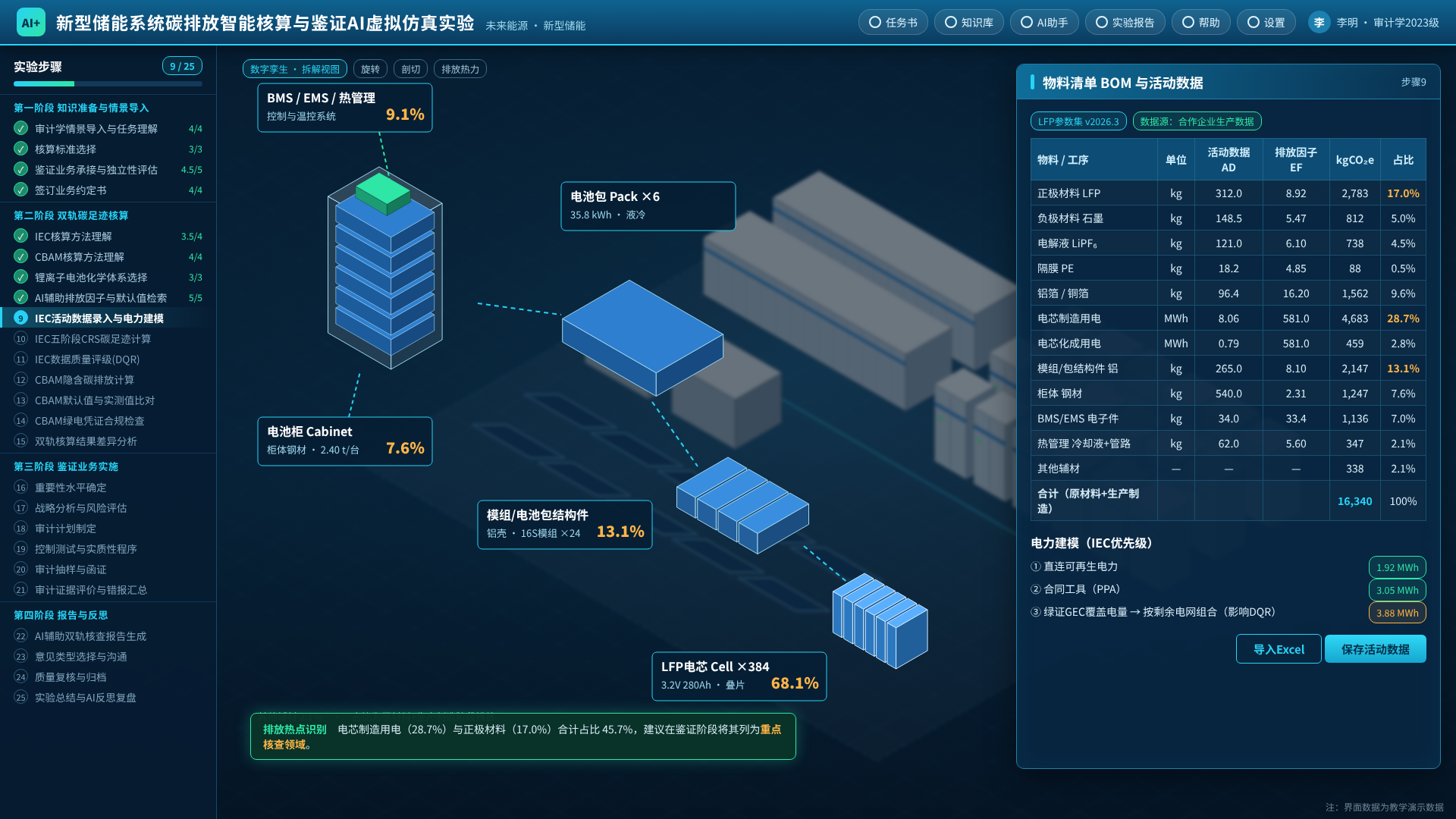
Connects storage-system structure, BOM and activity data in one view, using fictional teaching data.将储能系统结构、物料清单与活动数据放在同一视图中;画面数据为虚构教学示例。
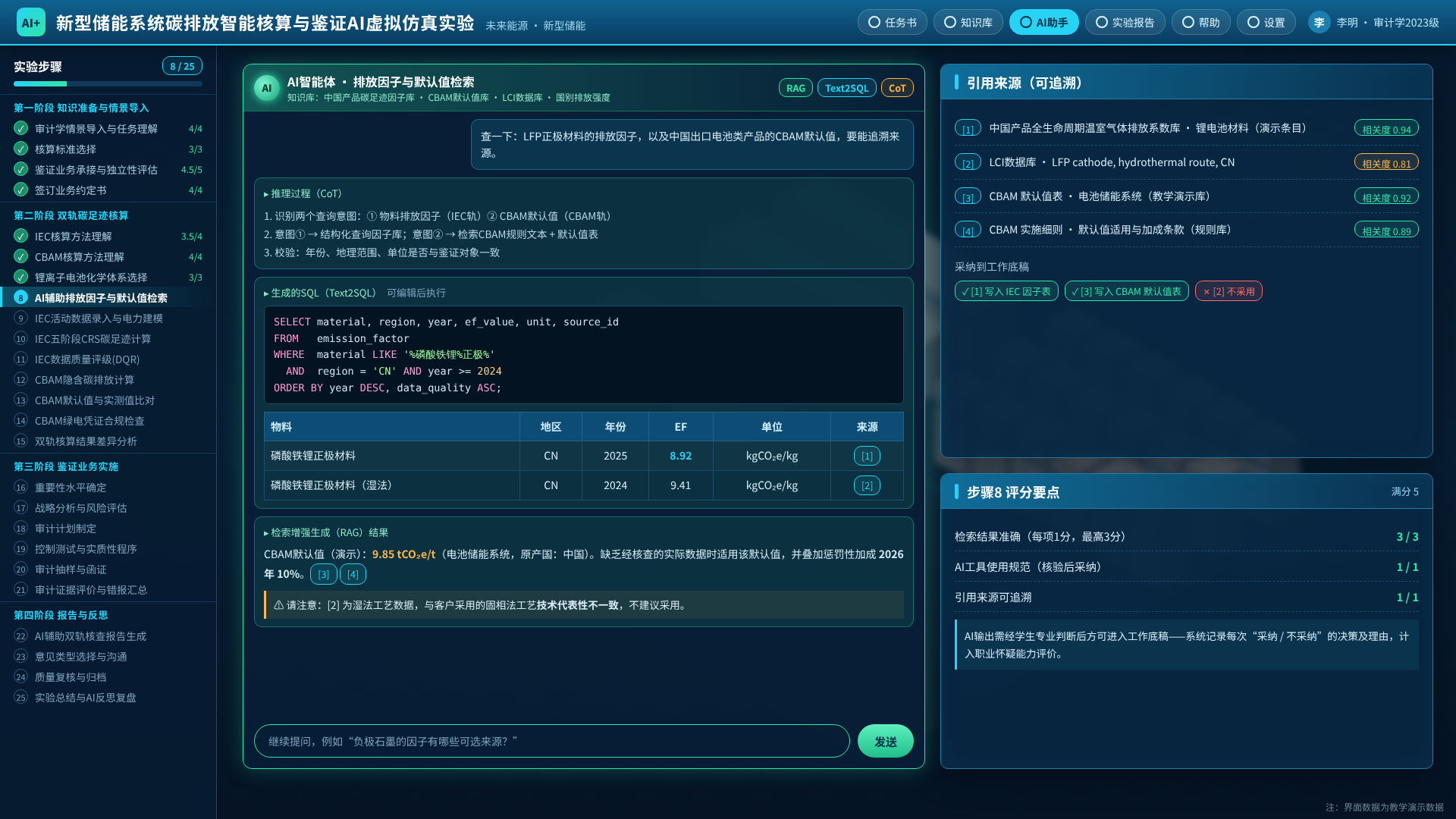
Illustrates factor candidates, source references and the human decision to adopt a result.演示因子候选、引用来源与人工采纳判断之间的关联。
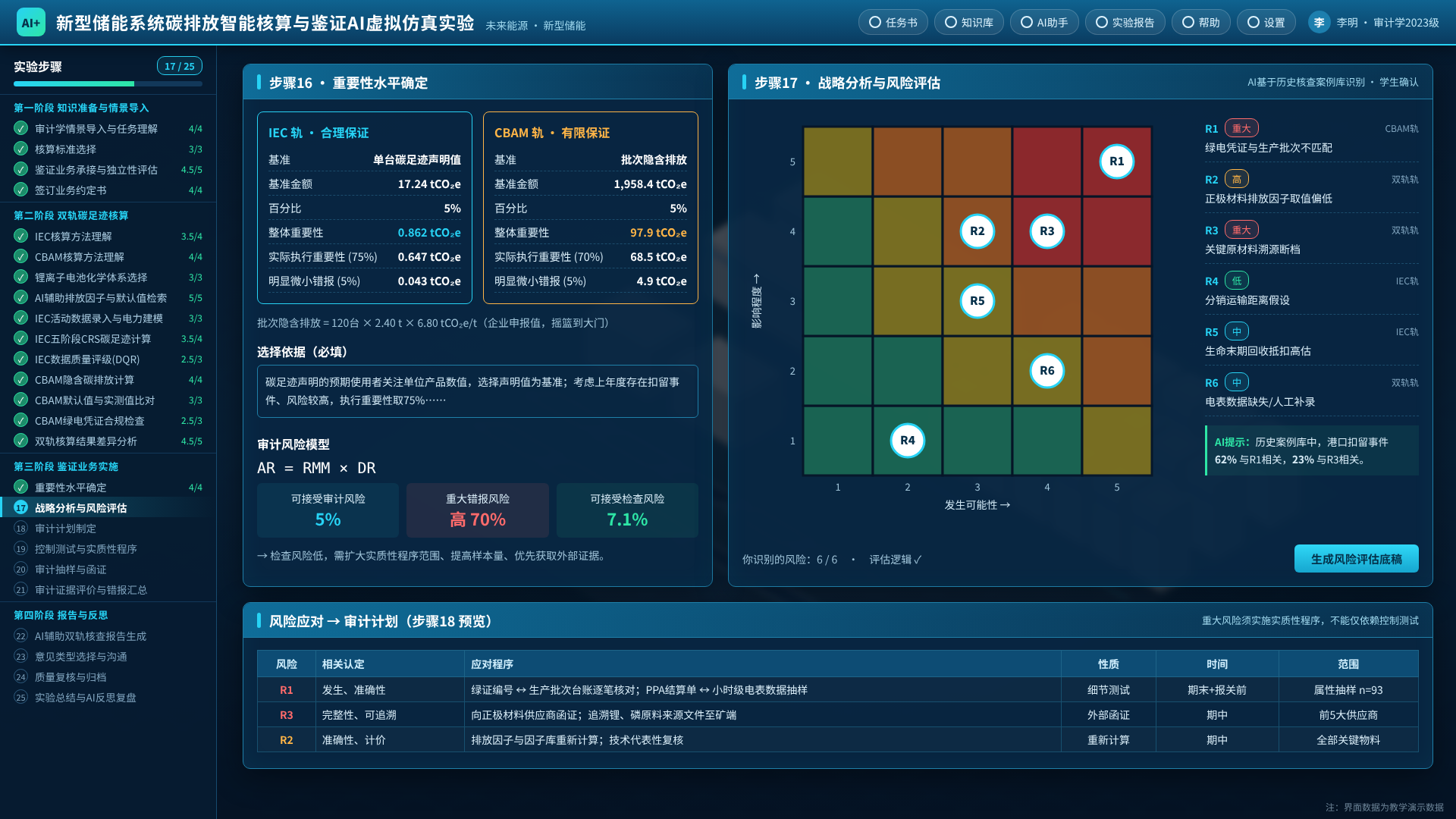
Connects materiality judgments, a risk heatmap and the procedures selected for further review.把重要性判断、风险热力图与后续核查程序串联起来。
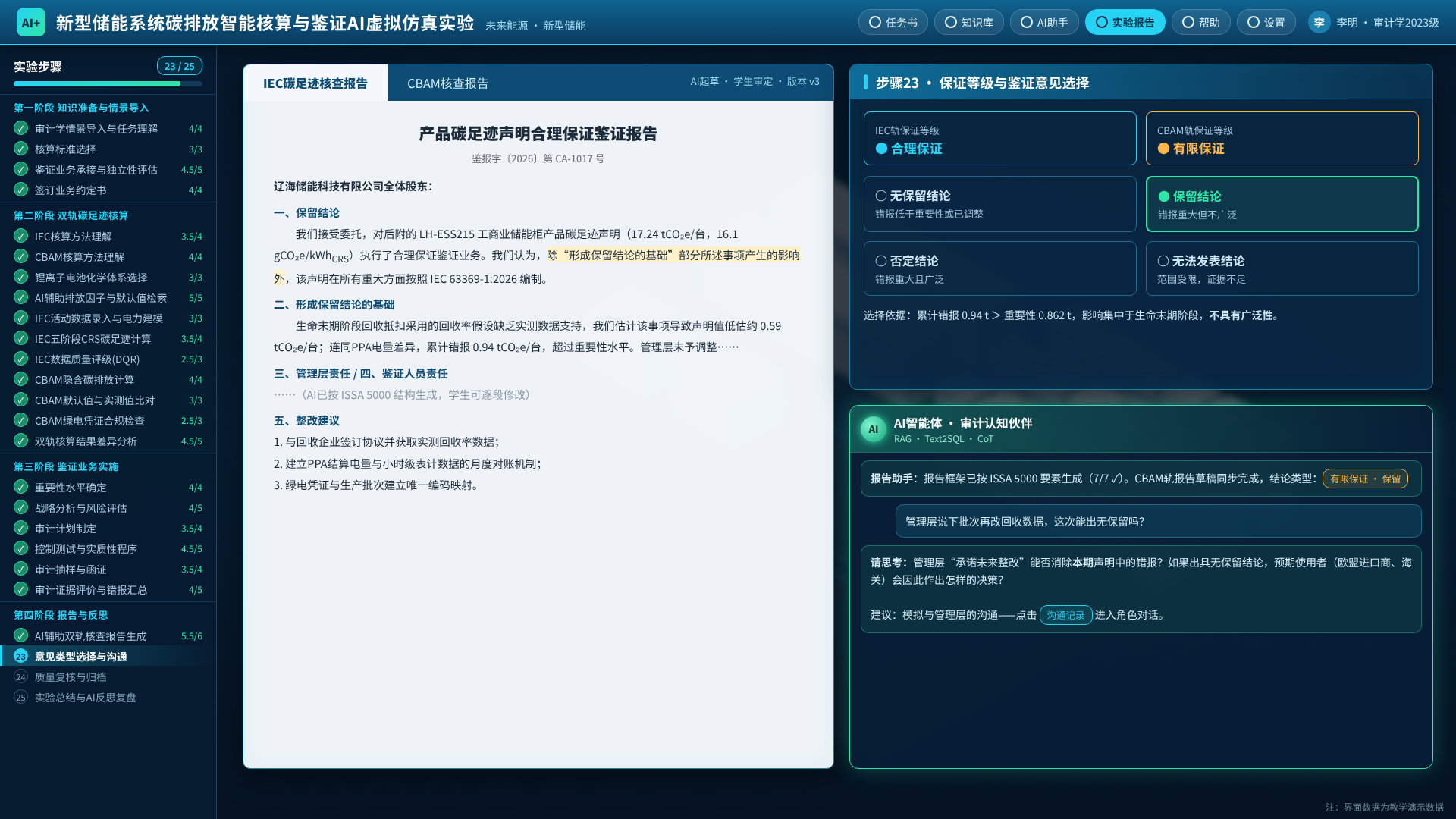
A fictional report illustrates evidence evaluation, drafting and professional judgment; it is not an assurance opinion.以虚构报告演示证据评价、报告草拟与专业判断,不构成正式鉴证意见。
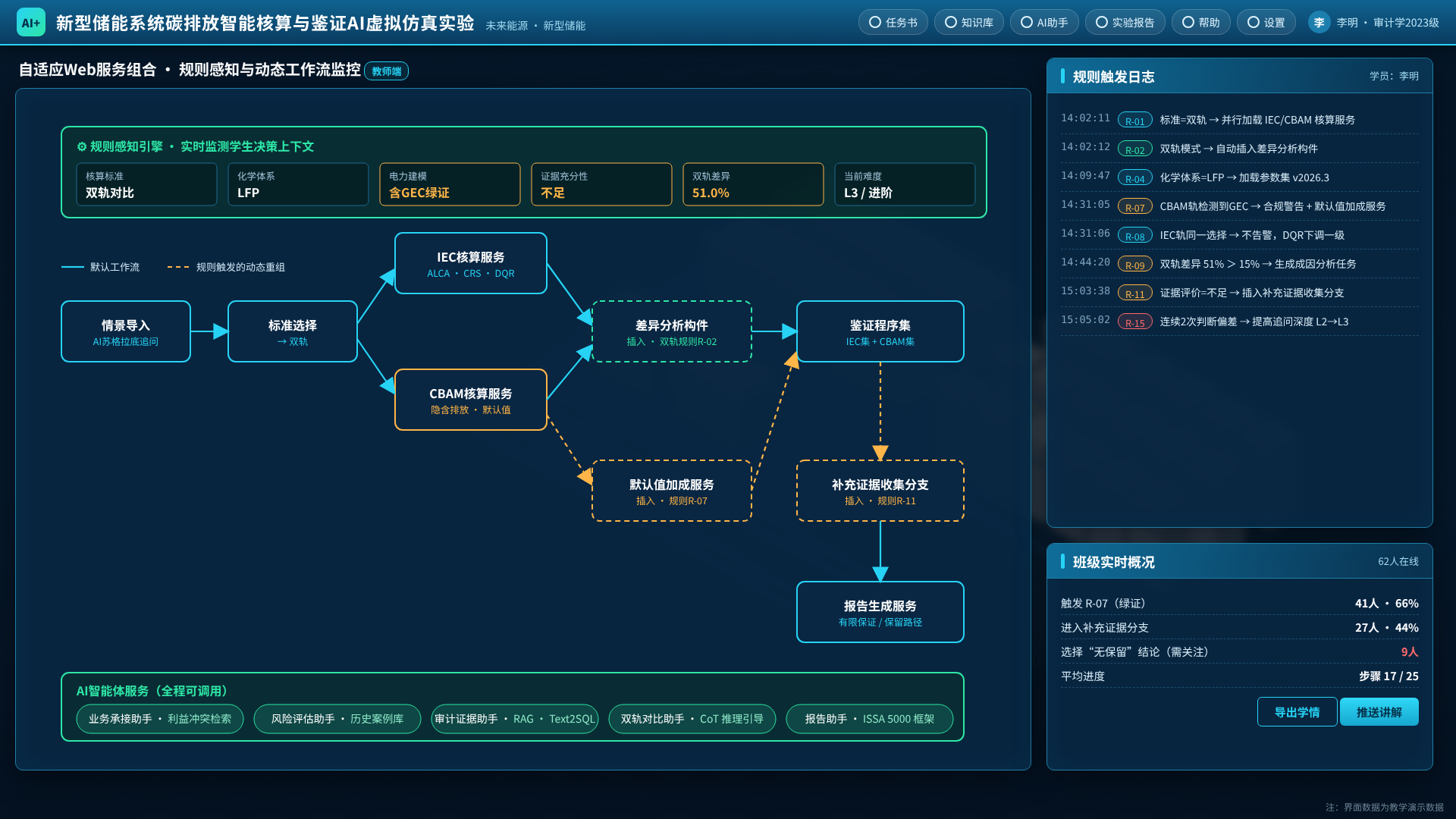
A proposed instructor view illustrates rule triggers, follow-up tasks and learning-progress monitoring.教师端概念视图展示规则触发、补充任务与学习进度监控。
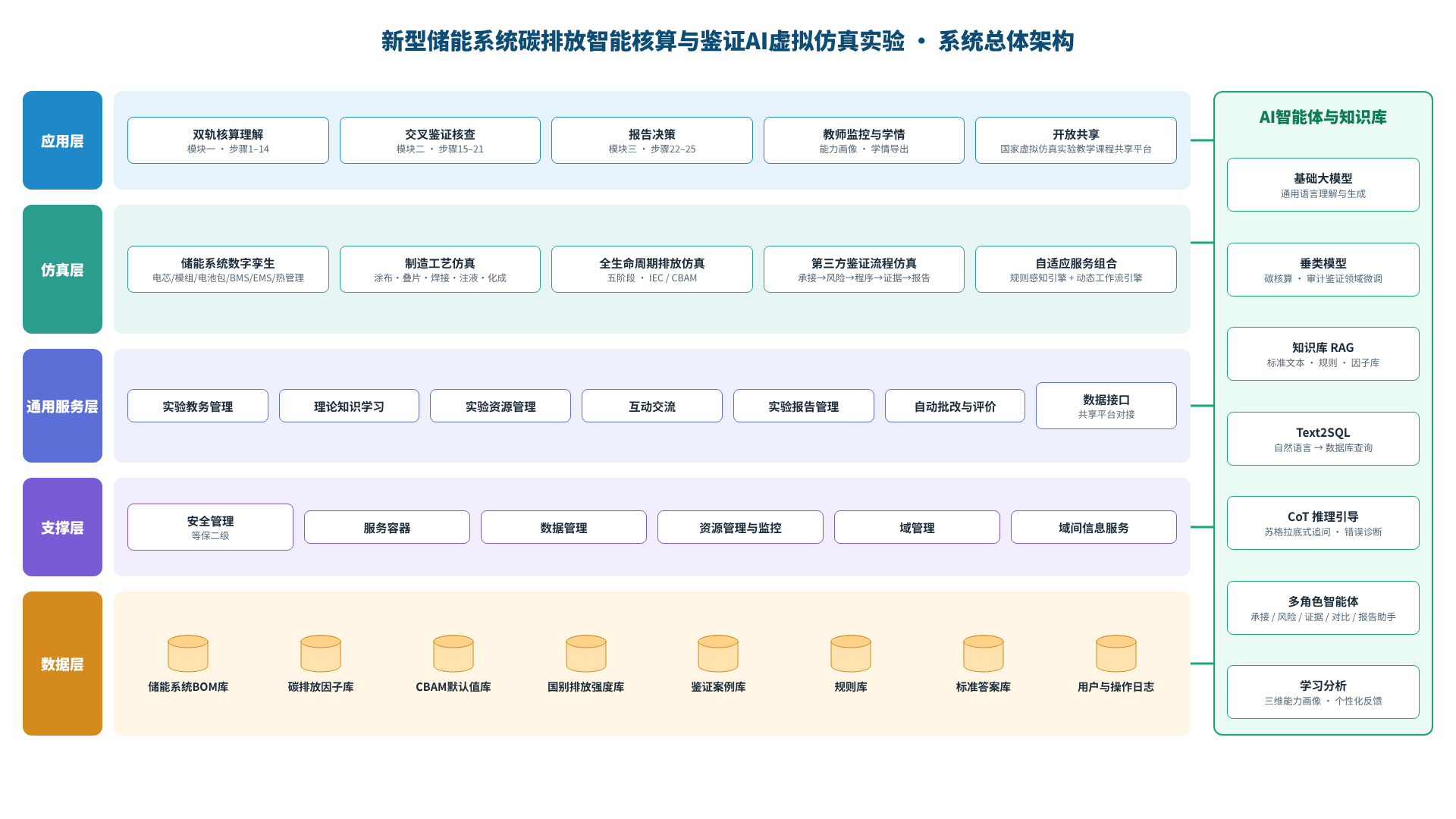
Shows proposed application, simulation, service, support and data layers; security and platform connections are design goals.展示拟建应用、仿真、服务、支持与数据层;安全及平台对接内容为设计目标。
Follow the complete concept, from assignment introduction to system architecture.从实验情景导入到系统架构,查看完整设计过程。
View all 14 images查看全部 14 张原型图 ↓A repeatable scenario takes learners from engagement scope to evidence-based reporting, with instructor review and reflection throughout.通过可重复的实验情景,让学习者从业务范围界定走向基于证据的报告判断,全程融入教师复核与反思。
Identify responsibilities, independence, scope, criteria and intended users.明确责任、独立性、范围、评价标准及预期使用者。
Select chemistry, lifecycle boundary and functional unit; assess regulatory scope.选择化学体系、生命周期边界和功能单位,评估法规适用范围。
Connect activity data and factor versions; evaluate quality and assumptions.关联活动数据与因子版本,评价数据质量及模型假设。
Assess materiality and risks; design appropriate tests and sampling.评估重要性与风险,设计适当的测试程序及抽样方案。
Check sources, investigate differences and request missing support.核对来源、调查差异,对缺失支持材料开展补充取证。
Prepare a draft report, justify conclusions and replay the learning path.准备报告草稿、说明结论依据,并回顾实验路径。
Original Chinese-language concept screens in project order, with bilingual captions. Open any image to browse the full gallery.按项目顺序呈现中文界面设计原图,配以中英双语图题。打开任意图片,即可浏览整套原型图。
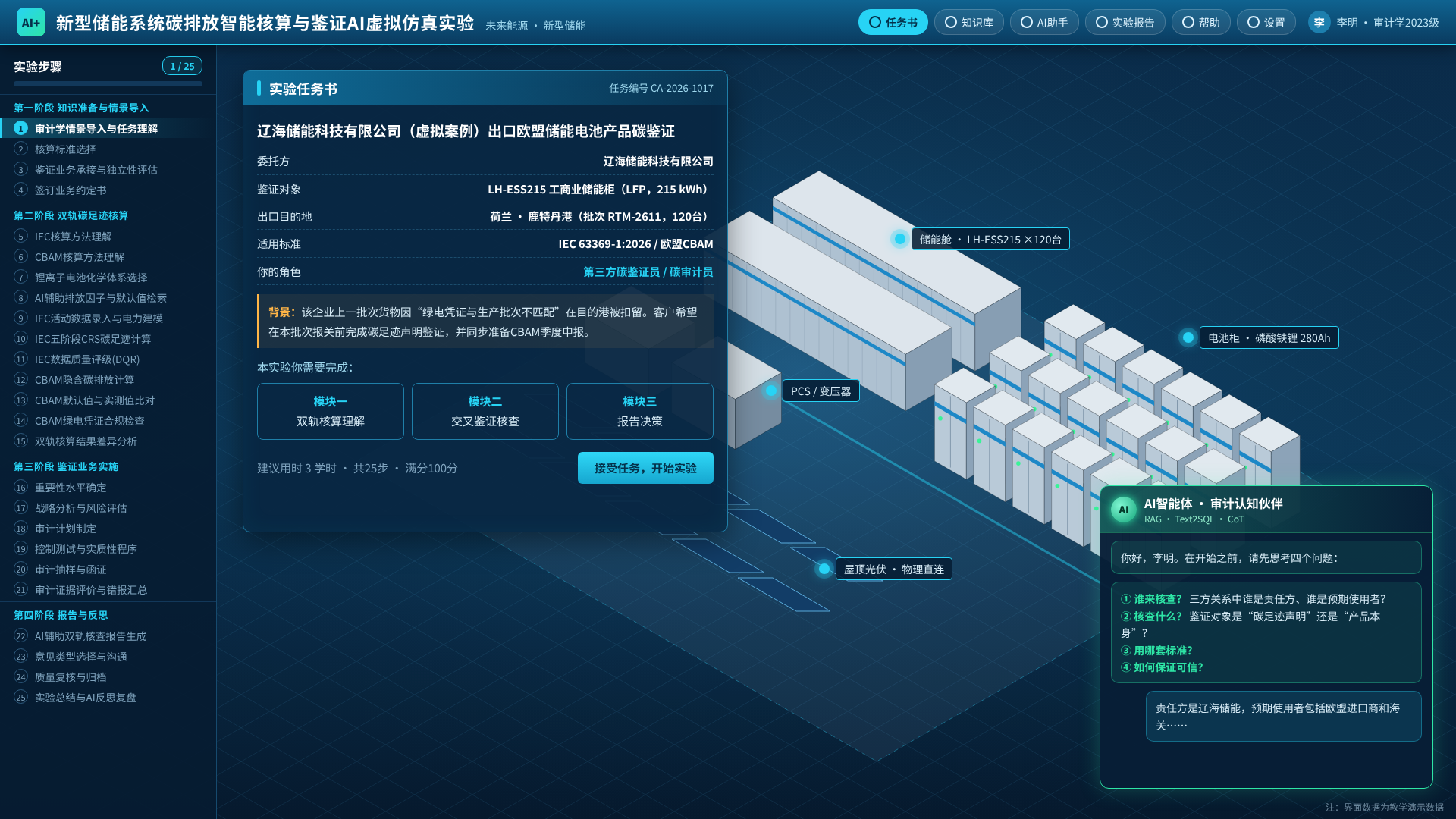
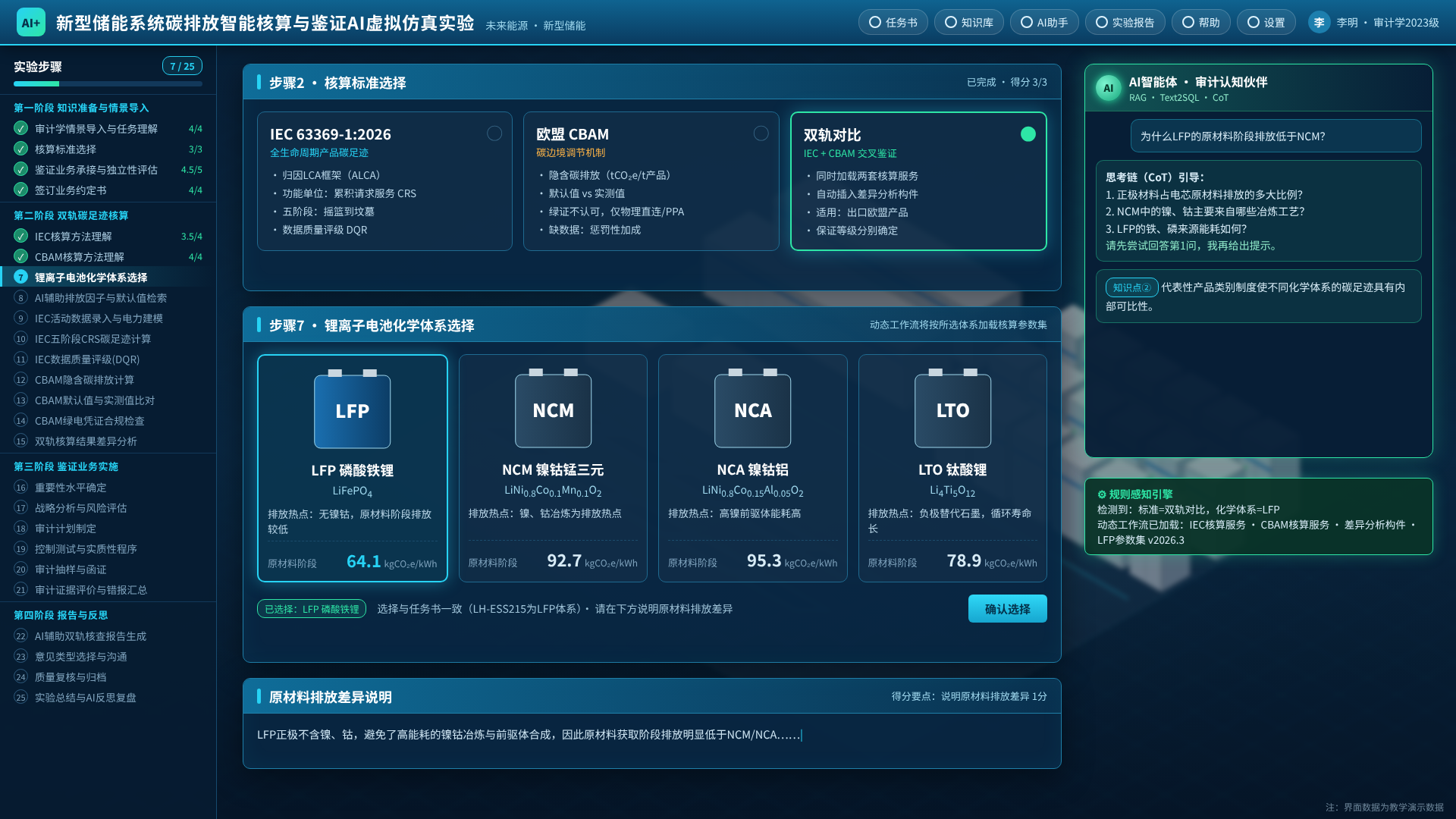
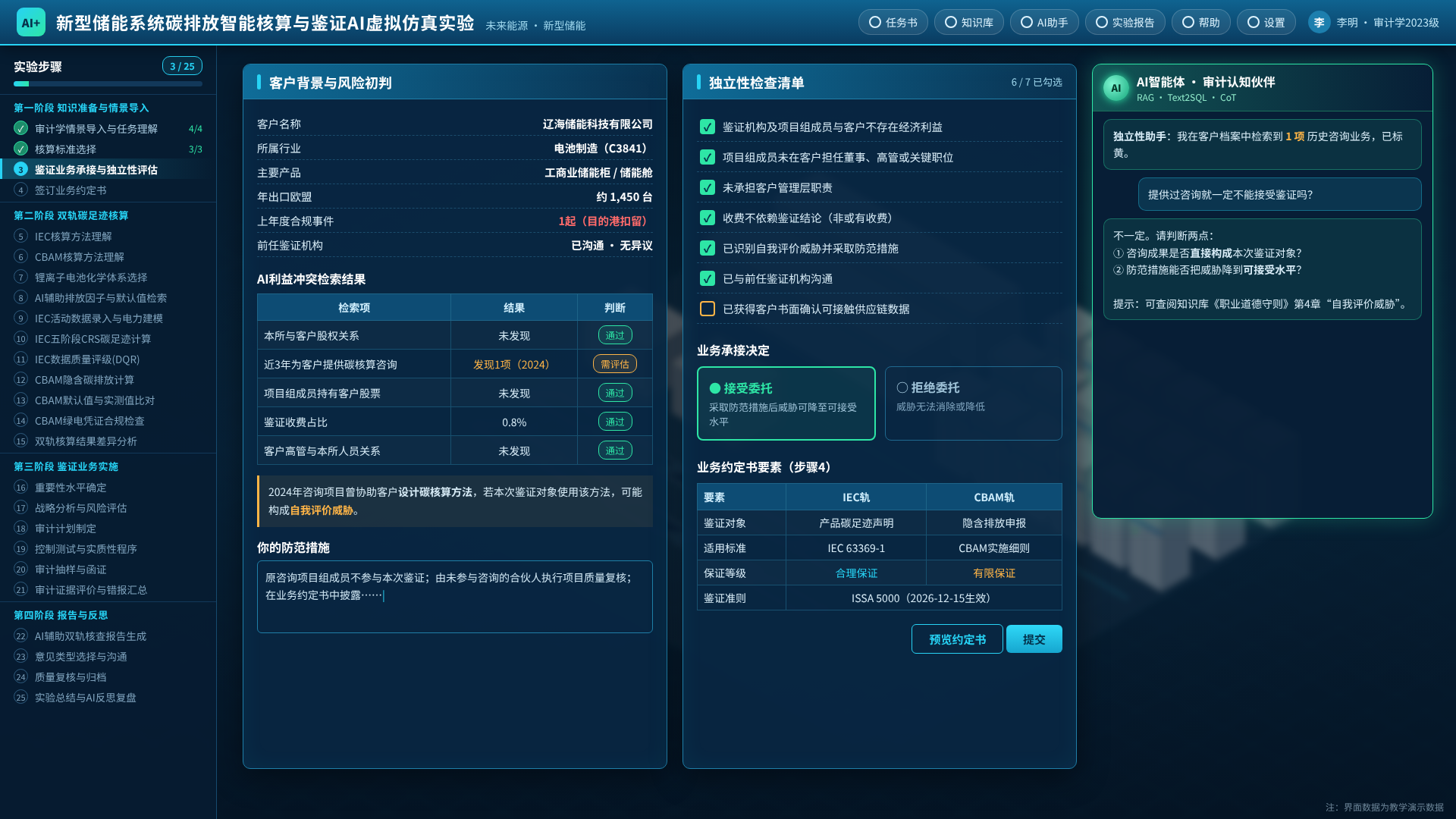
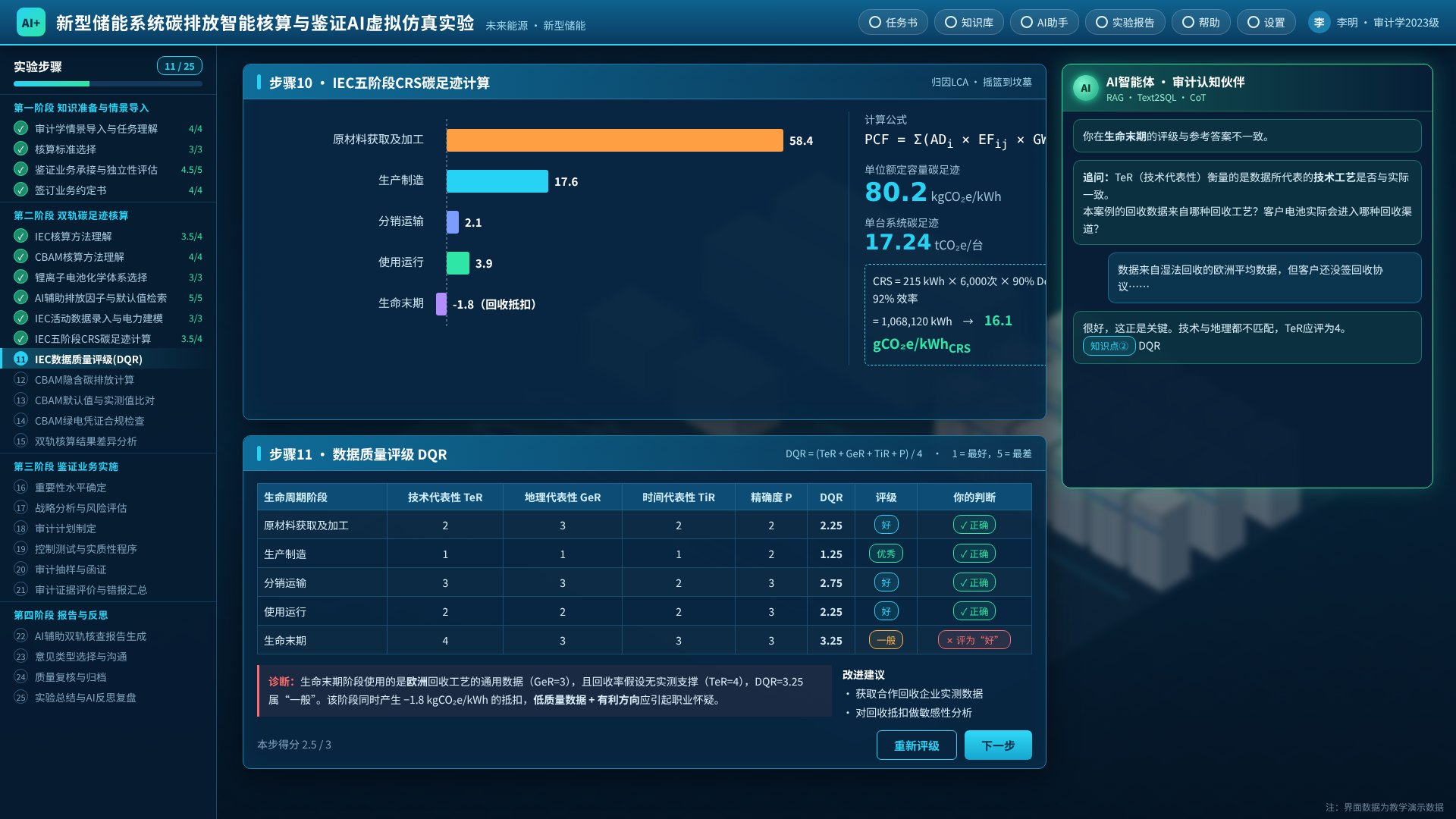
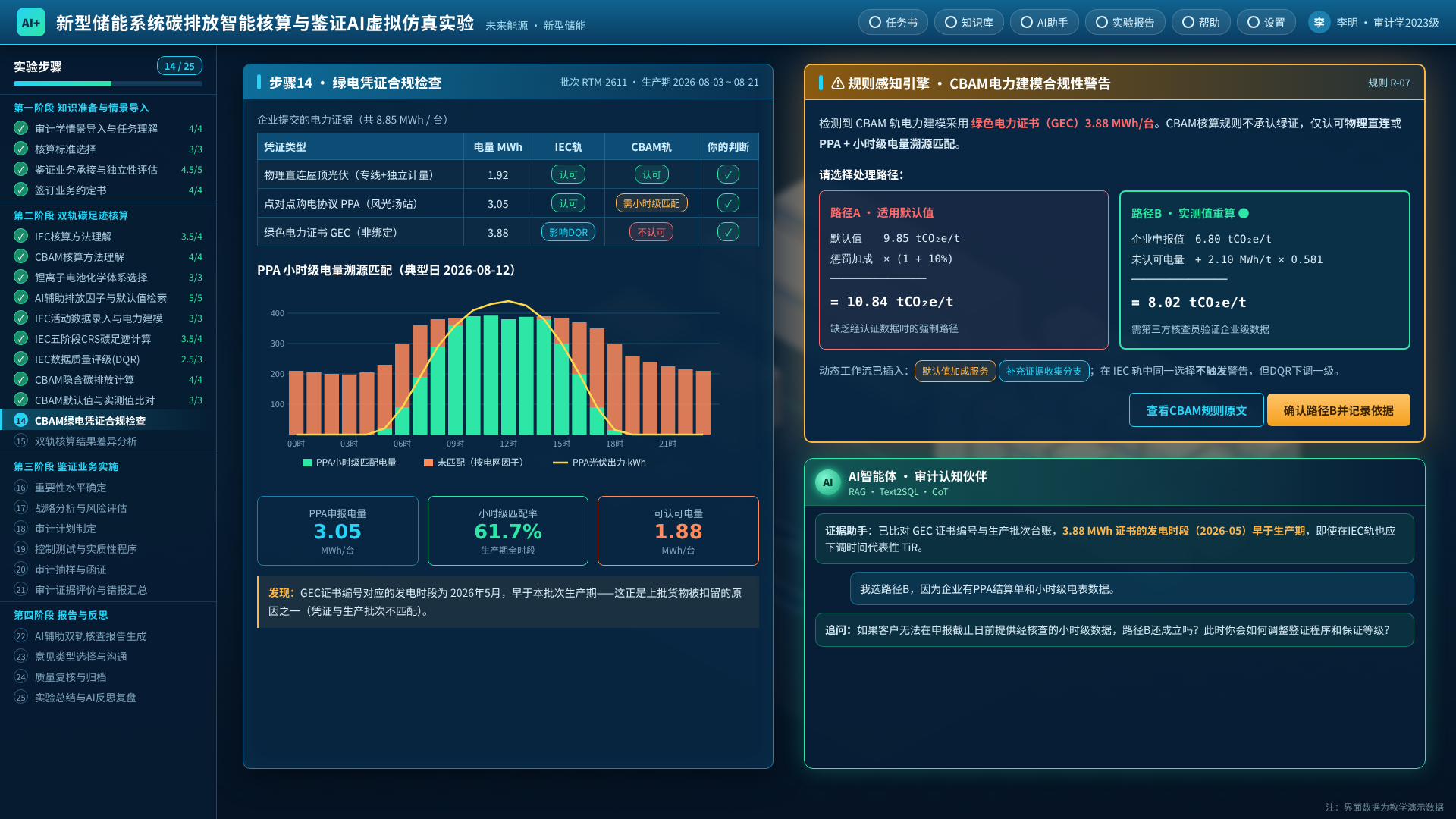
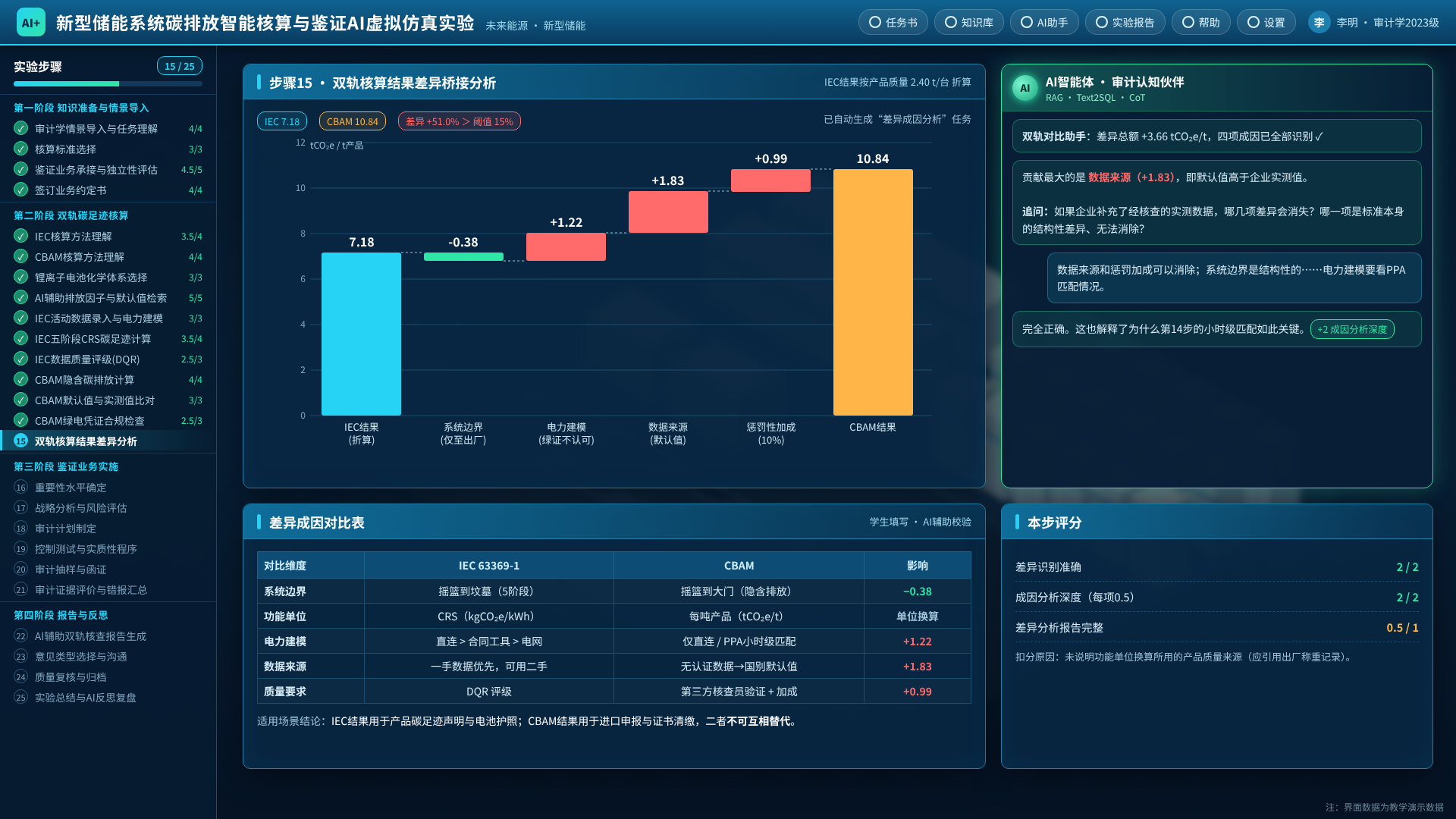
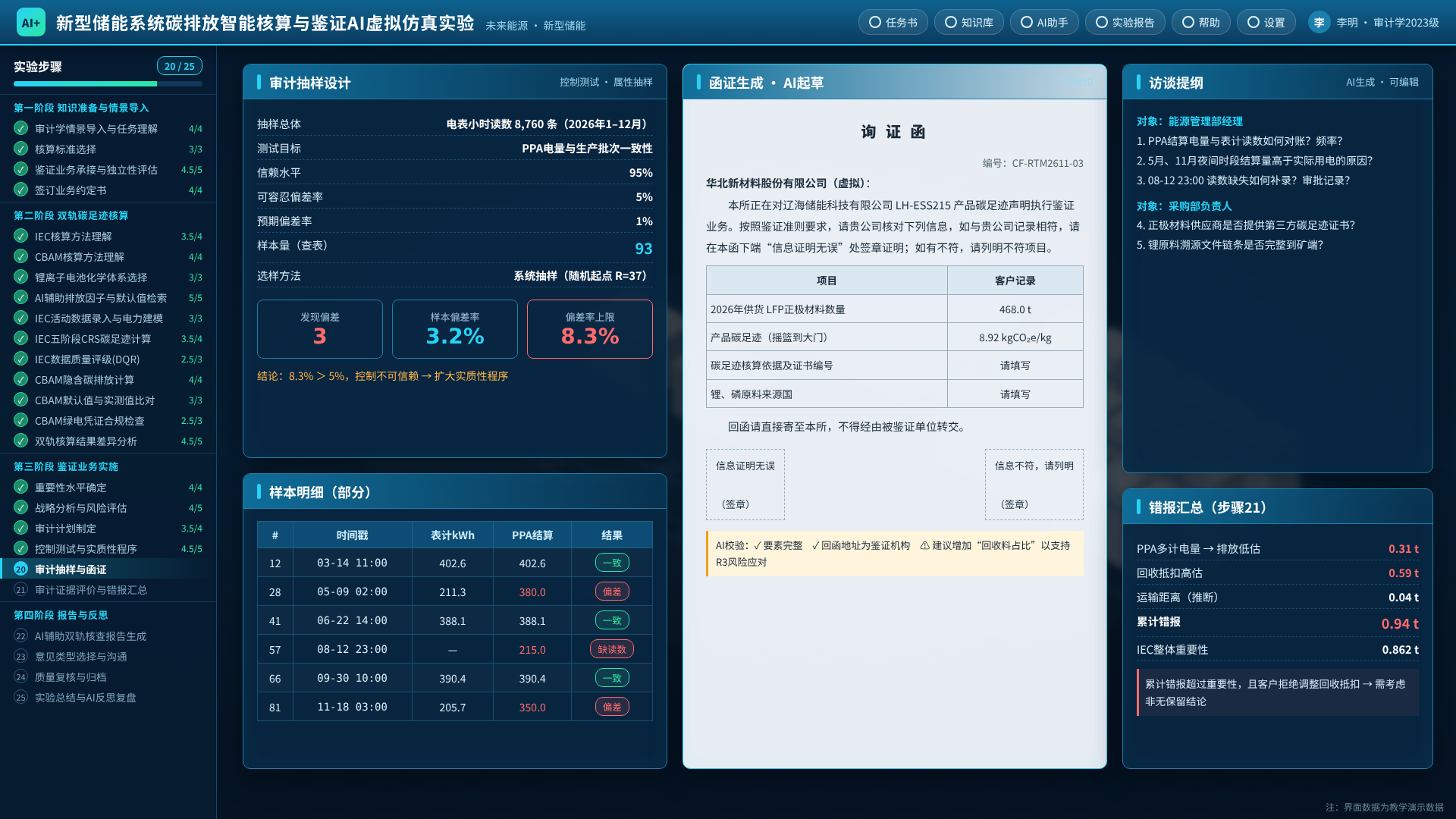
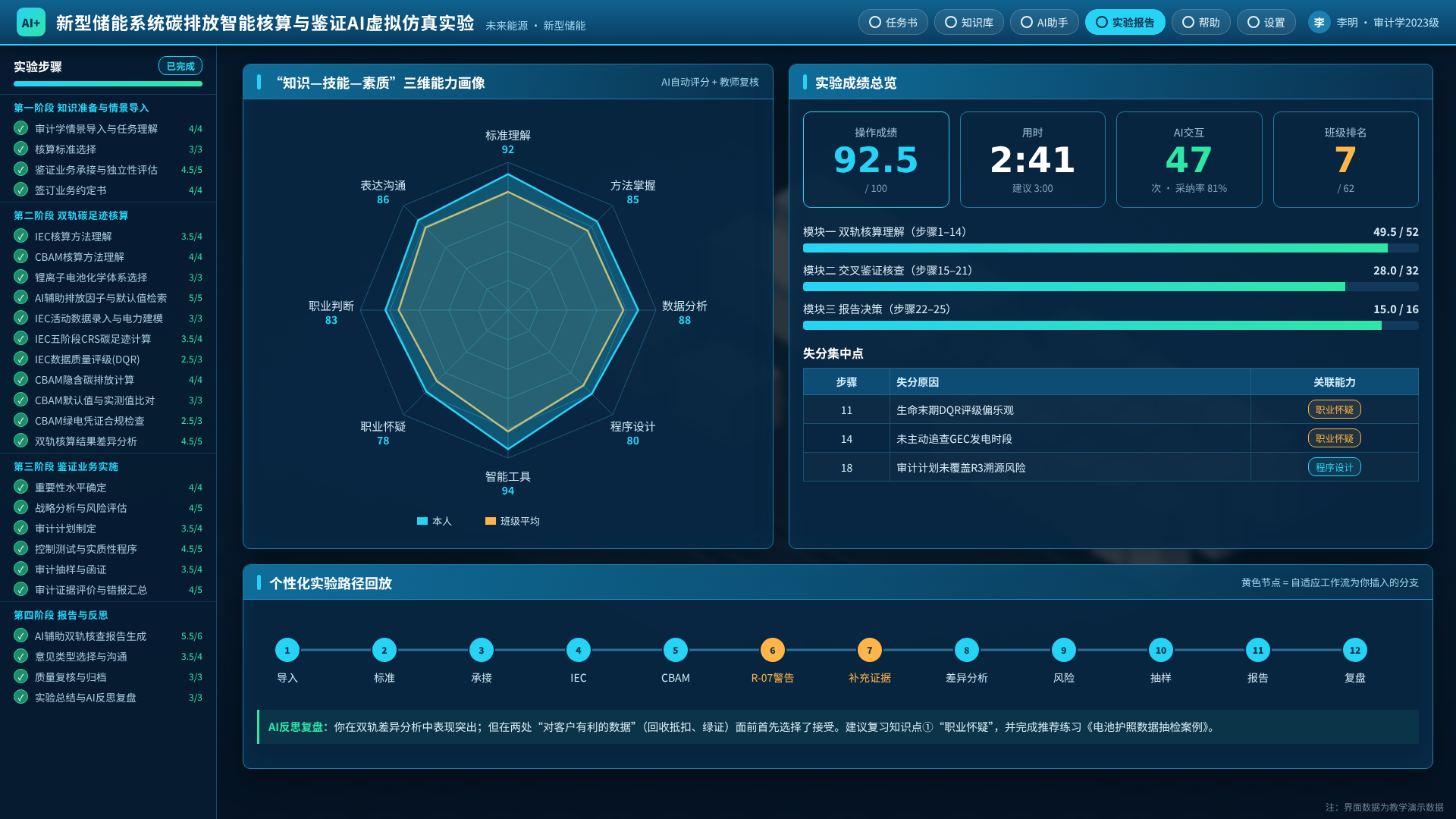
All 14 images are static design illustrations. The interface text remains in its original Chinese; the captions and gallery controls support Chinese and English.全部 14 张图片均为静态设计示意。图片中的界面文字保留原始中文,图题与图库操作支持中英双语。
Progress through reviewable increments, starting from an agreed product scope and a small, documented reference case.从明确的产品范围和可追溯参考案例开始,以可复核的阶段成果逐步推进。
Confirm product category, intended outputs, applicable rules, data permissions and teaching requirements.确认产品类别、预期输出、适用规则、数据授权与教学需求。
Deliverable: data dictionary + reference scenario阶段成果:数据字典与参考情景Implement a bounded lifecycle model, validate arithmetic against reference calculations, and test review and traceability.实现边界明确的生命周期模型,对照参考计算验证,并测试审核与追溯流程。
Deliverable: validated pilot + review records阶段成果:经验证的试点与复核记录Add role-based scenarios, instructor controls, cited AI assistance and learning feedback, then evaluate with users.扩展分角色场景、教师控制、带引用的 AI 辅助与学习反馈,并开展用户评价。
Deliverable: teaching scenario + evaluation findings阶段成果:教学场景与评价结果Battery rules, CBAM and assurance standards serve different purposes. Read the checked references and implementation boundaries.电池法规、CBAM 与鉴证准则各有用途。查看已核对的参考资料与实施边界。